
Why Drainage Upgrading Projects Often Require Temporary Overpumping Systems in Singapore
Updated: Jul 20
What Most People Do Not See Behind Drainage Upgrading Works
When drainage upgrading works are carried out in Singapore, most people notice the excavators, temporary barriers, and construction activities on site.
What many do not see is the temporary pumping system working behind the scenes.
While drains, culverts, or canals are being upgraded, water flow cannot simply be stopped. Rainwater and existing drainage flows must continue moving through the network to prevent flooding, service disruption, and safety risks.
This is where a Temporary Overpumping System becomes critical.
Without a properly designed overpumping arrangement, construction works may face operational challenges, project delays, and increased flood risks during rainfall events.

Why Water Flow Cannot Be Interrupted During Construction
Singapore's drainage network operates continuously throughout the year.
Even when upgrading works are taking place, the drainage system must continue to:
Convey stormwater runoff
Prevent upstream flooding
Protect surrounding developments
Maintain public safety
Support ongoing construction activities
Unlike some utility systems that can be temporarily shut down, drainage infrastructure must remain functional throughout the construction period.
As a result, temporary flow diversion solutions are often required before any upgrading work can begin.
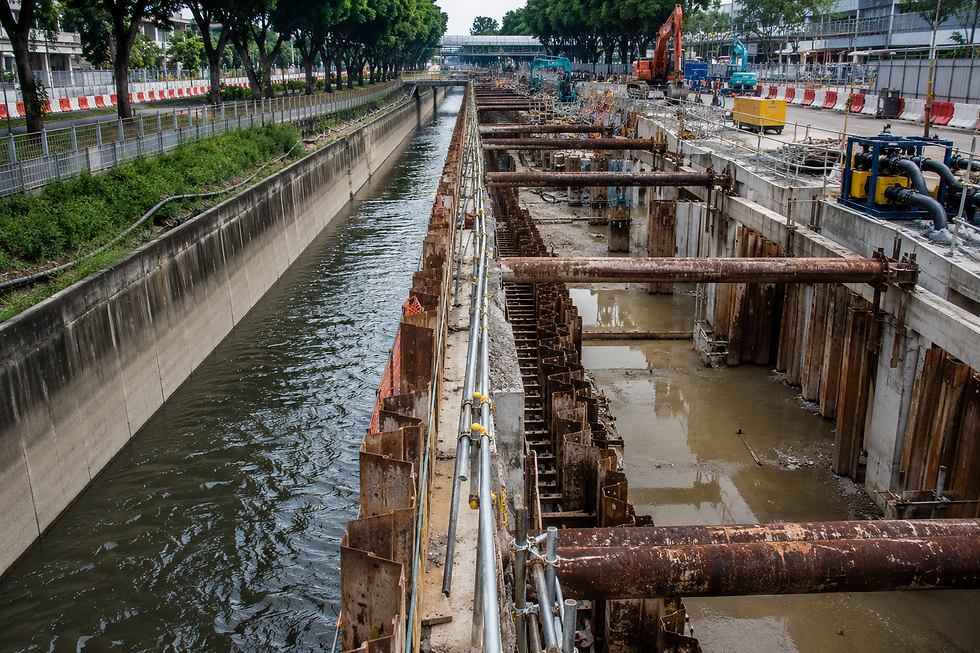
What Is A Temporary Overpumping System?
A Temporary Overpumping System is an engineered arrangement that diverts water around an active construction zone using temporary pumps and pipelines.
The system typically includes:
Temporary pumping units
Suction and discharge pipelines
Backup pumps
Temporary power supplies
Monitoring and control systems
Its purpose is straightforward:
Maintain continuous drainage flow while permanent infrastructure is being upgraded or replaced.
Although temporary in nature, these systems often operate continuously for weeks or months and therefore require careful engineering design.

Key Engineering Considerations During Temporary Overpumping Design
1. Continuous Flow Management
The first step is understanding how much water must be conveyed during normal operating conditions.
Engineers evaluate:
Existing drainage flow
Catchment characteristics
Base flow conditions
Construction phasing requirements
The temporary system must be capable of maintaining uninterrupted operation throughout the project duration.

2. Designing For Heavy Rainfall Events
Singapore experiences intense tropical rainfall throughout the year.
A temporary pumping system that performs adequately during dry weather may be insufficient during a major storm event.
Engineering assessments often consider:
Design storm scenarios
Rainfall intensity data
Catchment runoff conditions
Potential flood risks
Proper planning helps reduce the likelihood of flooding during construction.
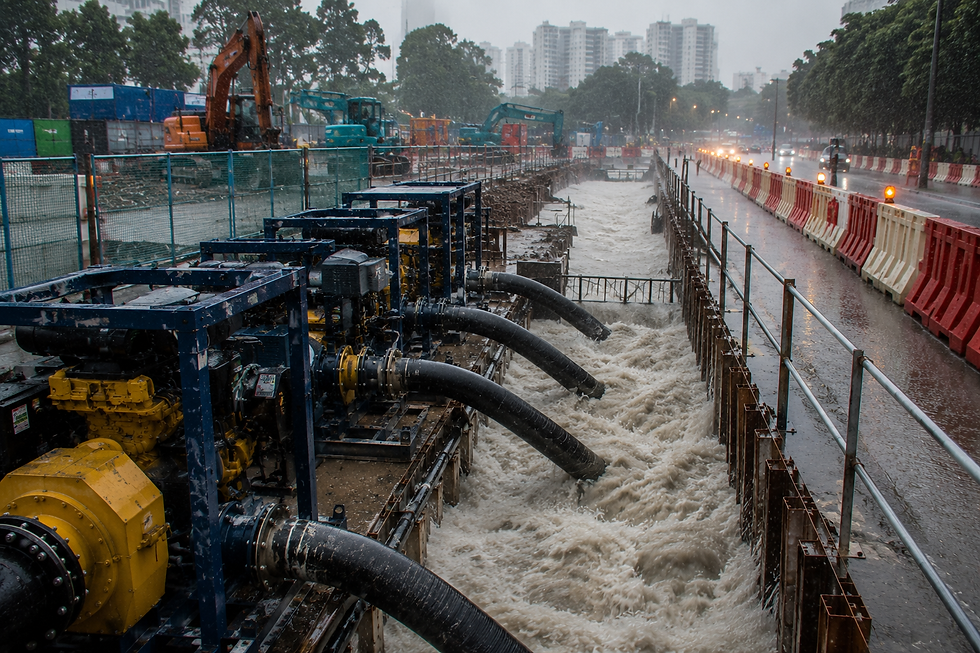
3. Pump Capacity And Redundancy
Pump selection is one of the most important aspects of overpumping design.
Engineers assess:
Required flow rate
Total dynamic head
Friction losses
Pipeline length and routing
Site constraints
Equally important is redundancy.
Backup pumps are often incorporated into the design to ensure reliability in the event of equipment failure.
For critical drainage infrastructure, redundancy is frequently a key project requirement.

4. Temporary Pipeline Routing
Temporary discharge pipelines must be carefully coordinated with ongoing site activities.
Factors typically considered include:
Available site space
Construction access routes
Existing utilities
Safety requirements
Environmental considerations
A well-planned routing strategy helps minimise operational risks and site disruptions.

5. Reliability Throughout Construction
Many temporary overpumping systems operate continuously throughout the entire construction phase.
To improve reliability, engineers may incorporate:
Duty and standby pump arrangements
Water level monitoring
Alarm systems
Backup power provisions
Maintenance access requirements
These measures help ensure that drainage performance is maintained even under challenging site conditions.

Risks Of An Inadequate Temporary Overpumping System
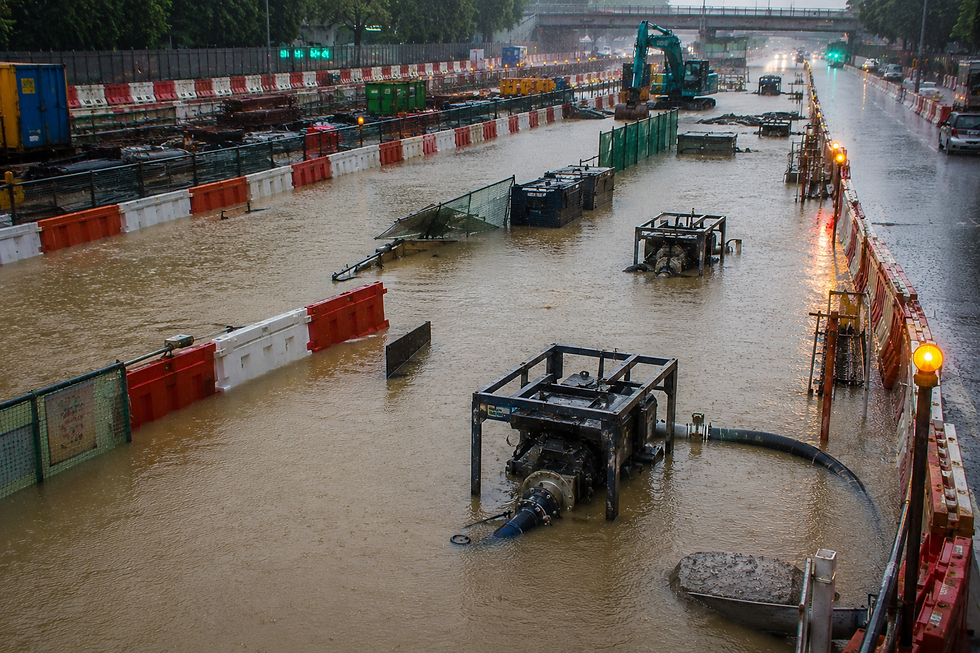
An undersized or poorly planned temporary pumping arrangement can lead to:
Localised flooding
Construction delays
Damage to surrounding infrastructure
Safety hazards
Increased project costs
Emergency rectification works
For this reason, temporary overpumping should be treated as a critical engineering system rather than simply a temporary site installation.
The Importance Of Early Engineering Assessment
Many project challenges can be identified during the planning stage.
By conducting early engineering assessments, project teams can better understand:
Flow requirements
Pump sizing needs
Routing constraints
Redundancy requirements
Potential construction risks
This helps improve project reliability and reduces the likelihood of costly modifications during construction.

Supporting Infrastructure Projects In Singapore
At Conceptial (SG) PTE LTD, we support contractors, developers and project teams with engineering solutions for infrastructure and building services projects.
Our services include:
Hydraulic and flow assessments
Temporary overpumping system design
Pump sizing calculations
Temporary pipeline routing studies
Engineering coordination
Authority submission support
Construction phase technical assistance
Because successful infrastructure projects are not only about building new systems.
They are also about ensuring existing systems continue to operate safely and reliably throughout the construction process.
Need Support For Drainage Upgrading Works?
Whether you are planning drainage upgrading works, utility diversion projects, or temporary pumping arrangements, early engineering input can help identify potential risks before construction begins.
Contact Conceptial (SG) PTE LTD to discuss your project requirements.
Learn more about MEP Consultant Singapore and how early engineering planning can reduce project risks.
📞Contact us to discuss your project requirements.

Comments